The beautiful problem of bringing a product to market.
Can a better
package
earn its keep?
Start with the object. Turn the choice over. See what it costs—and what it would need to earn.
EXPLORE THE DESIGNIt's commercially possible.
PER UNIT TO THE PACKAGING BILL
Three packaging treatments. One product. A measurable tradeoff between creative expression and contribution.
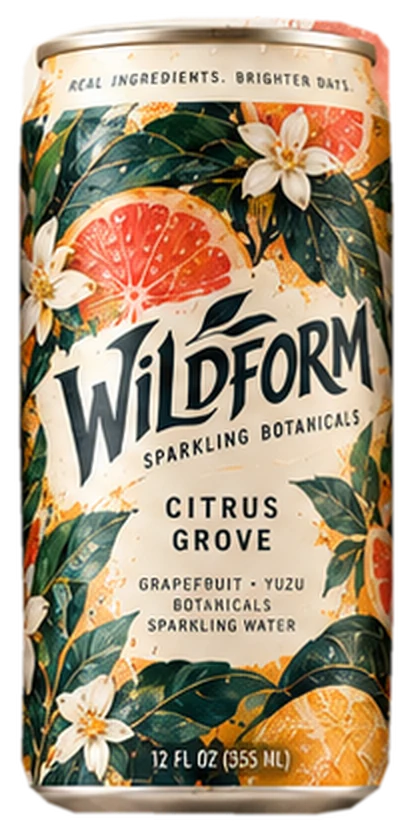
One product. Three possible futures.
Choose a commercial strategy, then a production treatment. We retain the same Citrus Grove identity across every finish while the assumptions and economics change.
A THREE-MINUTE FIELD TEST 01 · Choose a strategy and finish → 02 · Adjust an assumption → 03 · Compare and export your decision.
Where should the value live?
Invest selectively in memorable details; validate whether the added cost earns a real shelf advantage.
Packaging options represent conceptual production treatments, not verified vendor specifications or quotes. Images illustrate the creative direction—not actual spot-gloss, foil, or embossing proofs.
The finish is the decision.
One identity, three very different production intents. Each route has its own design priorities, commercial purpose, and validation requirement.
Be seen for the right reasons.
Use richer illustration and selective emphasis to build a repeatable core brand experience—not finish for finish's sake.
Richer botanical depth with deliberate emphasis around key graphics.
A core-line shelf treatment to test against the Essential baseline.
Explore selective sheen only if the chosen decoration process supports it.
Test whether shoppers recognize enough value in the improved presentation to justify its added cost; don't assume design automatically increases demand.
Confirm the finish can be produced consistently, then test shopper and retailer response at the proposed shelf price.
Invest in the details that carry the premium promise.


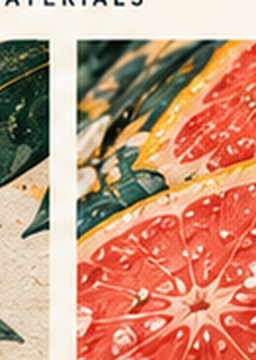
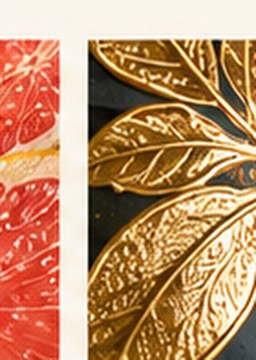

These are illustrative treatment studies, not verified can-print effects, vendor specifications or prices. Specialty metallic, raised, and selective-gloss looks may require alternate decoration processes and must be quoted and tested before committing.
What does
the detail demand?
At 20,000 units: −$5,200 contribution impact. Retail price lift to offset: +$0.49 / unit.
TEST YOUR ASSUMPTIONSThe numbers behind the design.
The workbench separates assumptions from evidence. Edit a strategy without losing the others, then compare their modeled contribution at equal sales volume.
Move the sliders to experiment, or enter exact values below.
Enter exact values Optional / more precise than sliders
Values are constrained to the same illustrative ranges as the sliders. Leave the field to apply a valid number.
* Fee is applied to wholesale revenue, not shelf price. † Fixed manufacturer-funded promotion deduction per unit. Actual commercial agreements vary.
The unit economics reflect your selections.
Don't guess.
Compare.
One product. Nine paths.
Explore all three finishes against all three strategies. Each cell shows modeled monthly contribution at the same unit volume. Labels describe strategic fit, not expected sales. Select any cell to explore it.
BEFORE COMMITTING / FIRST TESTValidate the chosen route and consumer response.
MODELED CONTRIBUTION, NOT A SALES FORECASTComparison assumes a common monthly volume, retailer margin, distributor fee and promotional allowance. Each strategy uses its own saved retail price and base cost. Higher modeled contribution does not establish shopper demand or strategic fit.